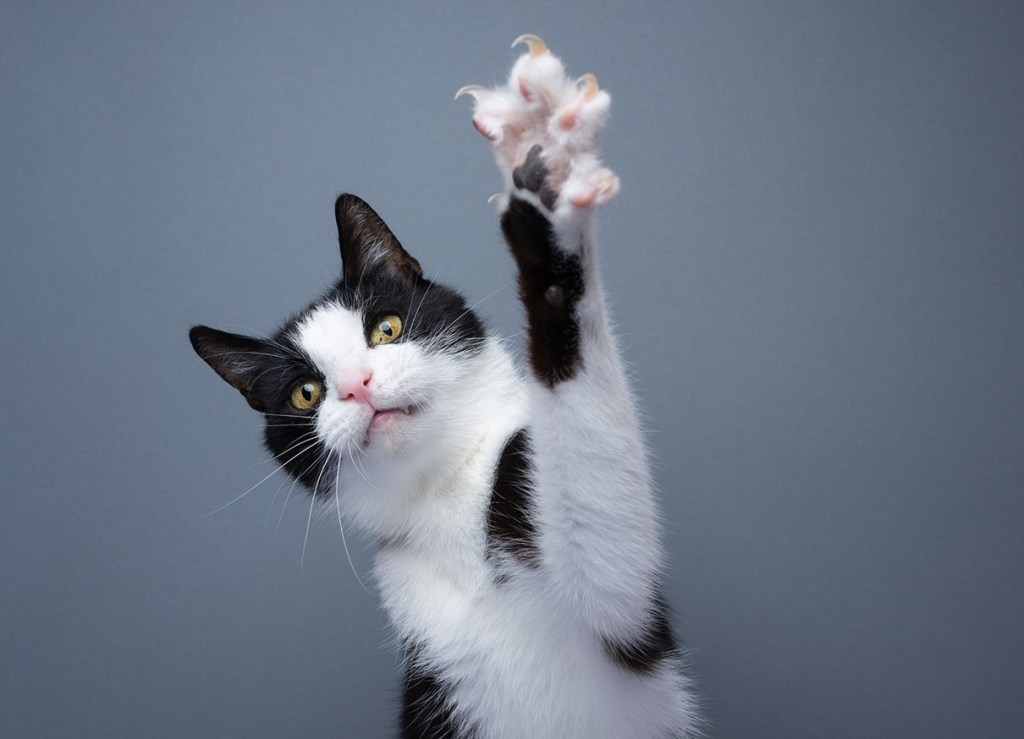
Or, “Stop scratching that couch like it owes you rent”
Anatomy of Cat Claws
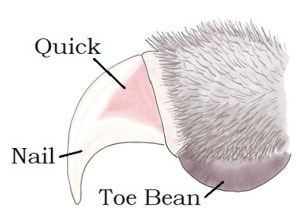
The cat claw—part tool, part weapon, and 100% fascinating. Just like your nails, these little daggers are made of keratin. At the heart of each claw is the quick—a sensitive zone full of blood vessels and nerves, like a no-touch zone with built-in alarms.
If your cat’s claws are light-colored, the quick will show up as a pinkish streak. It is easy to identify if you look closely at your cat’s claws. For darker claws, spotting it might require a little detective work (and maybe a flashlight).
The Nitty Gritty – Come ‘Ere Kitty! The Mechanics of the Snip
Get the Right Gear
Use a pair of pet nail clippers (scissor-style or guillotine-style both work, but scissor-types are usually easier for beginners). Skip human nail clippers—they can crush instead of cleanly cutting.
Find the Quick
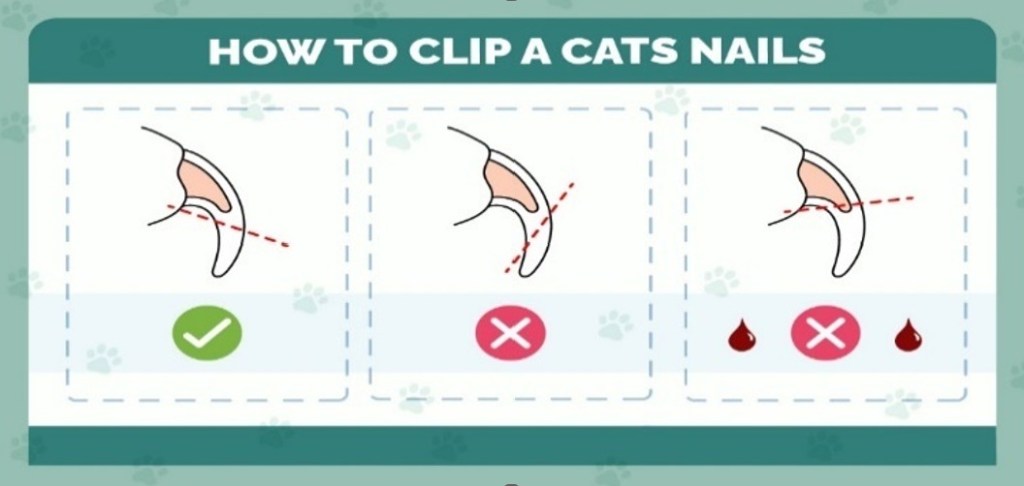
The quick is the pinkish area inside the nail that contains blood vessels and nerves. You’re trimming just the clear/white tip, never into the quick. On dark nails, it’s harder to see, so err on the side of taking less.
Angle the Cut
Instead of chopping the nail straight across, tilt the clippers at a slight 45° angle. Imagine following the natural curve of the claw. This keeps the nail from splintering and helps avoid sharp edges.
Take Tiny Snips
Don’t go for a lumberjack swing. Clip just the tip—think “take off the needle point, not the whole claw.” If in doubt, it’s better to trim too little than too much.
Smooth It Out (Optional)
Some people use a pet nail file to take off sharpness after trimming, but usually the angled cut does the trick.
Treats = Truce
Nail trims are a lot easier when the cat associates them with snacks. End every session with a treat (for the cat, and maybe for you too).
Tips on Trims!
Getting Your Kitten Used to Nail Trims: The Purr-suasive Approach
Kittens aren’t born nail-trim enthusiasts, but with patience, teamwork, and a sprinkle of bribery, you can turn nail trimming from a scary ordeal into a tolerable (if not enjoyable) routine. Here’s how to ease them into it, with extra tips for enlisting help from a second pair of hands.
Start Early, Start Slowly
Begin handling your kitten’s paws as soon as they join your home. Gently touch and massage their paws while they’re relaxed or sleepy. Praise them and give treats so they associate paw-handling with positive experiences.
Get Them Used to the Clippers
Let your kitten sniff the nail clippers. (Think of it as introducing them to a new friend.) Open and close the clippers near them to get them accustomed to the sound. Reward them with a treat or some playtime afterward to build positive associations.
Make It a Game
Play with your kitten’s paws during cuddle sessions. Lightly press on their paw pads to extend the claws. Introduce the clippers during play—pretend to trim without actually cutting. Reward them when they stay calm, even if no nails are trimmed yet.
Enlist a Helper

For kittens who are extra squirmy (and most are), a two-person approach can be a game-changer:
Person A: The Holder
- Gently wrap the kitten in a towel (a “kitten burrito”), leaving only one paw exposed.
- Hold the kitten securely on their lap, using one hand to steady the paw.
- Talk to the kitten in soothing tones to keep them calm.
Person B: The Trimmer
- Focus on trimming one nail at a time while Person A keeps the kitten still.
- Work quickly but carefully, pausing for breaks as needed.
- Thank Person A frequently for their bravery
- Treats for everyone – humans and feline.
Trim After Playtime
A tired kitten is a cooperative kitten (well, more cooperative). After a vigorous play session, they’ll be more likely to tolerate handling. Combine this with a meal or treat break to keep them mellow.
Go One Paw at a Time
Start with one nail or one paw per session. Gradually increase how many nails you trim as they become more comfortable. Stop before your kitten gets too squirmy—quitting on a positive note is key.
Use Positive Reinforcement
Offer high-value treats, like a lickable snack or tiny bits of chicken, after each nail or paw.
Pair the treats with gentle praise so they associate nail trims with good things.
Stay Calm and Confident
Kittens can sense your emotions. If you’re nervous, they’ll feel it and resist more. Keep a steady, relaxed demeanor and take breaks if either of you gets frustrated.
Create a Routine
Trim nails at the same time and place every week or two. Consistency helps kittens understand what to expect and reduces their stress over time.
Distract and Reward
Keep the kitten focused on something they enjoy—like a chew toy, a treat, or even a bird video playing nearby. Offer a big reward at the end (treats for them, coffee or wine for you).
Bonus Tips
Don’t Rush It: If your kitten resists, take a break and try again later. A bad experience can make them fearful of nail trims.
Consider a Grinder: If clippers make them nervous, try a cat-safe nail grinder, which is quieter and less intimidating for some cats.
Reward Yourself Too: You’re doing great! Grab a snack or your favorite drink after each successful session—you’ve earned it!
Bonus Tips for Two-Person Trims
The Burrito Method: Wrapping your kitten snugly in a towel keeps their paws accessible and their claws contained.
Switch Roles If Needed: If one person consistently gets scratched, trade jobs to share the love (and the pain).
Practice Makes Purr-fect: The more often you and your kitten practice nail trims, the easier it gets for everyone.
Expect Feline Shenanigans
Despite your best efforts, your kitten may:
- Wiggle like a furry eel.
- Squeak pitifully, as if you’ve ruined their entire life.
- Attempt to ninja-flip out of the towel. If this happens, pause to regroup. A calm kitten is a cooperative kitten (or at least a less uncooperative one).
With time, patience, and persistence, your kitten will grow accustomed to nail trims. They may never love it, but they’ll tolerate it—and you’ll spend less time dodging their tiny, sharp daggers of destruction!
We Have Questions!
But What About Indoor/Outdoor Cats?
That is an excellent question, and I’m glad someone asked! For indoor/outdoor cats, nail trims are more about maintenance than makeover. Their claws are essential tools for climbing, defending, and sprinting, so you don’t want to blunt them too much. Instead, just clip the needle-sharp tips—the part most likely to snag your sweaters, curtains, or skin. Leave the curve and natural length intact so your cat still has their built-in Swiss Army knives for outdoor adventures. Removing that little tip will make a world of difference when they decide you need some biscuits on your face at 2 am.
Think of it as a safety trim: enough to protect your hands and furniture, but not so much that your cat loses their edge (literally).
This is all well and good … but I have a CAT, not a KITTEN.
So, also a great question. The mechanics are the same – but the vibe is very different. Cats are stronger and more strategic about escape tactics – but not impossible! Here is where the towel burrito comes in handy. You may need to condition them with treats or play, but I am a big fan of waiting until they are sleepy and getting a few at a time. Patience is key, and being gentle and not trying to force them to cooperate will go a long way.
 Feline Futures Care Foundation
Leave a comment