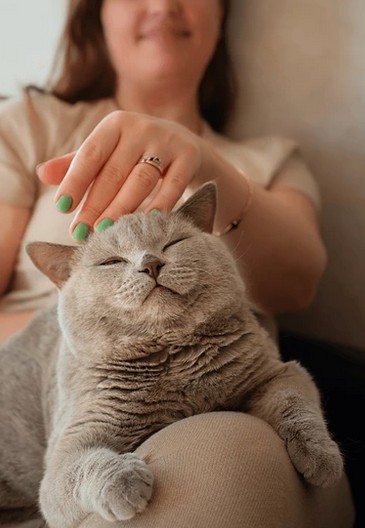
Not always about happiness!
Purring isn’t always about happiness. Cats purr when they’re content, but also when they’re nervous, in pain, or even self-soothing. Context matters. If they’re purring while rubbing against you, they’re probably happy. If they’re purring at the vet, they’re likely stressed.
Learning to read your cat’s body language will deepen your bond and prevent misunderstandings. Pay attention, observe the context, and remember: cats might be mysterious, but they’re also wonderfully expressive if you know how to listen (and watch). Consider this your first lesson in feline linguistics—no Rosetta Stone required.
What Is a Purr, Exactly?
A purr is a low, rhythmic sound that cats produce by rapidly contracting and relaxing the muscles within their larynx (voice box), combined with movement of the diaphragm. This vibration occurs during both inhalation and exhalation, creating that continuous, cozy hum.
Fun fact: Most domestic cats purr, as well as some wild cats like cheetahs and bobcats. But lions and tigers? Not so much.
🐾 Why Do Cats Purr?
While contentment is a big reason, cats purr for several other fascinating reasons:
1. Happiness and Comfort
Most commonly, a cat purrs when it’s feeling relaxed and safe. If your cat is curled up on your lap or basking in a sunny window and starts purring, it’s their way of saying, “Life is good.”
2. Communication
Kittens begin to purr when they’re just a few days old. It helps their mothers locate them and reassures them during nursing. This early use of purring as a communication tool often carries into adulthood.
3. Healing and Self-Soothing
Cats may purr when they’re injured or frightened. It’s believed that the frequency of a cat’s purr (between 25 and 150 Hz) can promote healing in bones and tissues and reduce pain and inflammation. Researchers have found that these same frequencies are used in vibration therapy for humans.
Several studies have shown that interacting with cats can reduce cortisol levels (the stress hormone) and increase the release of oxytocin and dopamine, promoting feelings of calm and connection.
In a 2009 study published in the Journal of Vascular and Interventional Neurology, cat ownership was associated with a reduced risk of death from cardiovascular diseases, including stroke and heart attack.
🧠 Interesting note: NASA has studied vibration frequencies for astronauts to prevent bone density loss—and the beneficial range overlaps with feline purr frequencies.
4. Stress or Fear
Surprisingly, some cats purr when they’re stressed or scared—such as at the vet or during thunderstorms. It’s their way of calming themselves, much like a child sucking their thumb.
5. Hunger and Attention-Seeking
Some cats have a special “solicitation purr” that mixes a purr with a meow to get your attention—especially when they want food. Yes, they’ve figured us out.
🐾 Should You Ever Worry About a Purring Cat?
Usually, no. But if your cat is purring and also showing signs of distress (such as hiding, refusing food, or excessive grooming), it might be a good idea to consult your vet. Remember, purring isn’t always a “happy” signal—it’s context that matters.
🐾 Final Thought: The Power of the Purr
Whether it’s for joy, comfort, or healing, the purr is one of the most enchanting things about cats. It’s their superpower, and it connects us to them in a deeply soothing way.
 Feline Futures Care Foundation
Leave a comment